Luxury Train History Guide: The Definitive Evolution of Elite Rail
Luxury train history guide. The evolution of the locomotive from a soot-covered engine of industrial necessity to a rolling palace of mahogany and crystal represents one of the most significant shifts in the history of human mobility. In the mid-19th century, rail travel was a grueling ordeal characterized by hard wooden benches, hazardous smoke, and a complete lack of sanitary facilities. The transition to “luxury” was not an inevitable byproduct of technological progress but a deliberate commercial strategy designed to capture a burgeoning upper class that demanded the comforts of a stationary grand hotel while traversing vast, often inhospitable landscapes.
To analyze this history is to examine the intersection of mechanical engineering, interior design, and the socio-economic stratification of the Gilded Age. The luxury train became a sovereign territory, a mobile environment where the elite could bypass the physical tolls of a developing continent. This was particularly true in the United States and Europe, where the development of the “Palace Car” and the “Grand Express” served as tools for nation-building and diplomatic signaling. These trains did more than move people; they established a standard of service and aesthetics that would eventually influence the hospitality industry globally.
Today, the legacy of these historical routes persists through a combination of meticulously restored vintage consists and modern interpretations of the “land cruise” concept. Understanding the lineage of these services requires a deep dive into the specific innovations—from the George Pullman sleeper to the Georges Nagelmackers express—that defined the era. This exploration is not merely an exercise in nostalgia; it is a structural analysis of how the hospitality industry successfully commodified time, distance, and privacy on a global scale.
luxury train history guide
A comprehensive luxury train history guide must function as more than a chronological list of famous locomotives. It serves as an analytical framework for understanding how the concept of “prestige” was engineered into the railway infrastructure. A common oversimplification in this field is the belief that luxury rail was defined solely by expensive materials—velvet upholstery or gold-leaf moldings. In reality, the “luxury” was primarily an achievement of logistical synchronization: the ability to provide fresh, gourmet cuisine in a moving kitchen, the engineering of suspension systems to ensure sleep, and the creation of a seamless service culture.
From a multi-perspective view, the history of luxury rail is also a history of labor and class hierarchy. While the passenger experienced the height of comfort, the operational reality depended on an invisible workforce of porters, chefs, and engineers working in cramped, high-pressure environments. To ignore the systemic labor of the Pullman Porters or the Wagon-Lits staff is to misunderstand the fundamental architecture of the luxury experience.
There is also the risk of viewing rail history through a strictly Western lens. While the Orient Express and the 20th Century Limited dominate the narrative, the luxury rail systems developed in India under the British Raj or the Blue Train in South Africa present different models of how rail was used to project power and maintain colonial administrative comfort. A true guide must reconcile these disparate regional histories into a cohesive understanding of how the steel rail became a global conduit for the high-end traveler.
Deep Contextual Background: The Evolution of the Rail Palace
The genesis of luxury rail can be traced to the mid-1860s, a period when long-distance travel in the United States was becoming a necessity but remained physically punishing. George Pullman’s introduction of the Pioneer in 1864 was the catalyst. It was wider, taller, and more ornate than any car before it, forcing railroads to modify station platforms and bridges to accommodate its scale. This marked the first time the infrastructure was forced to adapt to the requirements of passenger comfort, rather than the other way around.
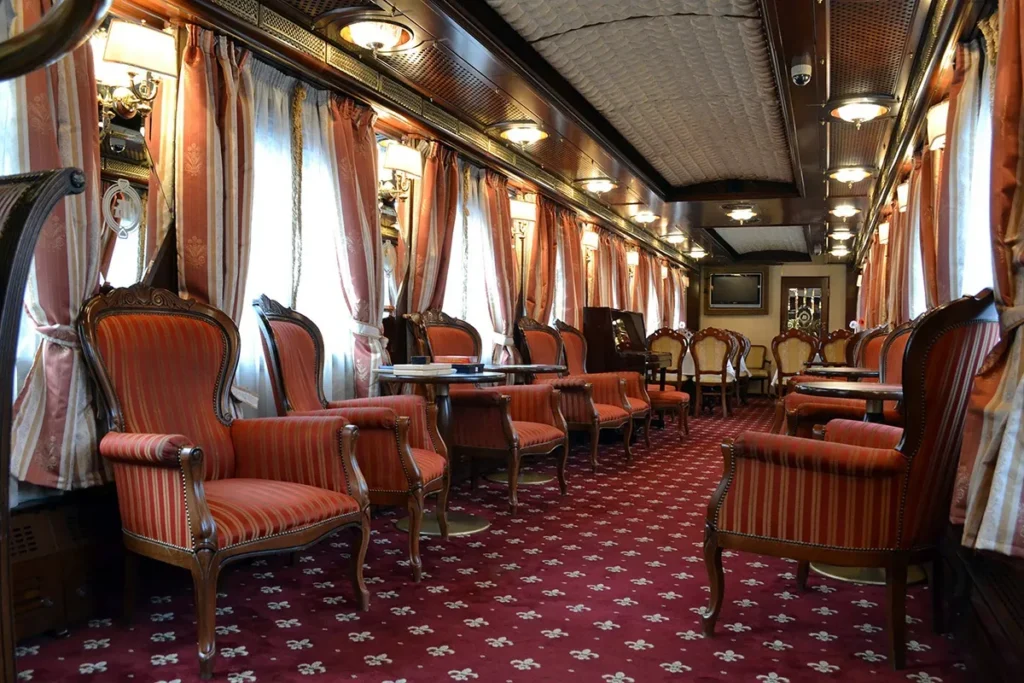
By the 1880s, the concept had crossed the Atlantic. Georges Nagelmackers, inspired by Pullman’s success, founded the Compagnie Internationale des Wagons-Lits. His vision was more diplomatically complex, requiring the negotiation of “through-train” rights across fragmented European borders. The launch of the Orient Express in 1883 was not just a victory of luxury, but a victory of international relations, creating a “corridor of civility” that linked Paris to Constantinople.
As the 20th century dawned, the competition intensified. In the U.S., the “Great Train Race” between the New York Central and the Pennsylvania Railroad led to the creation of the 20th Century Limited and the Broadway Limited. These were “all-Pullman” trains, meaning no coach seating was available. To board was to enter an exclusive social club. This era represented the peak of the “Sovereign Train,” where the locomotive was a self-contained world, independent of the landscape it traversed, offering barbershops, secretarial services, and telephone links at every major stop.
Conceptual Frameworks and Mental Models
To analyze the development of these services, one should apply several specific mental models that explain the “why” behind the “what.“
1. The “Hotel-on-Wheels” Synthesis
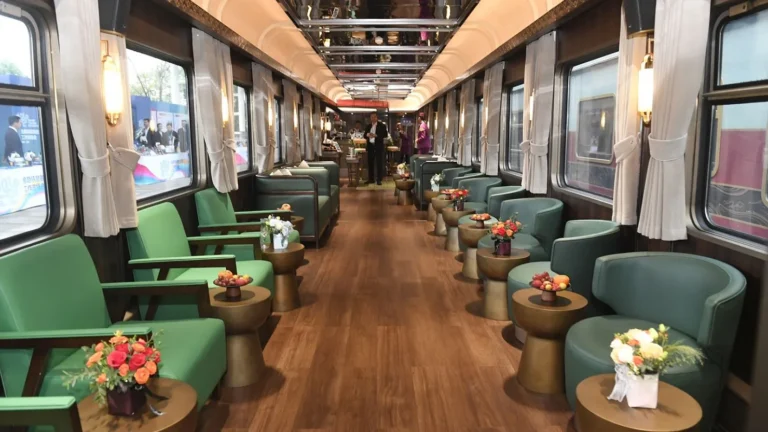
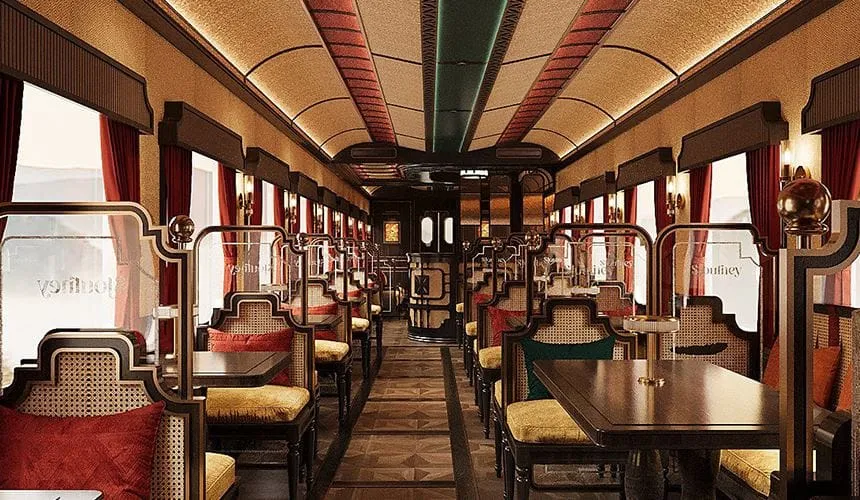
This model posits that luxury rail was not an extension of the stagecoach, but a mobile adaptation of the Grand Hotel. The design language—heavy draperies, formal dining rooms, and private suites—was intended to psychologically distance the passenger from the industrial nature of the locomotive. The goal was to make the traveler forget they were on a train until they looked out the window.
2. The Frontier Mitigation Framework
In the American West, luxury was a tool for mitigating the “terror of the wilderness.” The more hostile the exterior environment (deserts, mountains, plains), the more opulent the interior was designed to be. This created a protective “bubble” of civilization that allowed the elite to “conquer” the continent without enduring its hardships.
3. The Temporal Commodity Model
In the Golden Age, speed was a secondary luxury to time. The most expensive trains were often those that offered the most elaborate dining and social rituals, effectively turning the transit time into a leisure asset rather than a logistical lost cost.
Key Categories and Variations of Historical Rail
The history of luxury rail is segmented into several distinct operational models, each with specific trade-offs and legacies.
| Category | Defining Feature | Historical Peak | Primary Legacy |
| All-Pullman Express | Exclusive sleeper-only consist | 1900–1940 | Standardized luxury service culture |
| Transcontinental Palace | Multi-car “cities” for 3+ day trips | 1880–1920 | Regional development & tourism |
| Cross-Border Grand Express | International diplomatic/social link | 1883–1939 | European political integration |
| Private Varnish | Privately owned, custom-built cars | 1890–1930 | Bespoke interior design standards |
| Modern Heritage Revival | Restored vintage rolling stock | 1980–Present | Tourism as historical preservation |
Decision Logic: Heritage vs. Modernity
When evaluating the “best” historical experience today, the logic hinges on the tension between authenticity and comfort. A true “heritage” car (built 1920–1950) offers unparalleled aesthetic detail but may lack modern suspension and climate control. A “modern luxury” train (built post-2000) replicates the feeling of the past while utilizing carbon-fiber materials and high-speed rail capabilities.
Detailed Real-World Scenarios: The Mechanics of the Journey
Scenario A: The 1930s Transcontinental Crossing
A passenger boarding the Super Chief in Chicago.
-
Operational Constraint: The train must take on ice and fresh water at specific intervals to maintain the air-conditioning and kitchen functions.
-
Decision Point: The “Fred Harvey” dining experience vs. private cabin service.
-
Failure Mode: A mechanical breakdown in the Mojave Desert requires the “luxury” environment to sustain itself for 12+ hours without external support.
Scenario B: The Post-WWII “Streamliner” Shift
The transition from heavy, dark-wood Pullmans to stainless-steel, Art Deco streamliners like the California Zephyr.
-
Nuance: The introduction of the “Vista-Dome” changed the luxury focus from the interior to the view.
-
Second-Order Effect: The democratization of luxury—offering dome access to coach passengers—led to the eventual decline of the ultra-exclusive “all-sleeper” model.
Planning, Cost, and Resource Dynamics
The economics of luxury rail have always been defined by high overhead and low density. Historically, a luxury car carried 10–20% of the passengers of a standard coach but required 5x the staff.
Historical Cost Comparison (Inflation Adjusted to 2026 USD)
| Service Level | 1920s Equivalent Cost | 2020s Equivalent Cost | Value Factor |
| Standard Sleeper | $800 | $1,200 | Basic privacy & bed |
| Pullman Suite | $2,500 | $4,500 | Private bath, dedicated porter |
| Private Car Charter | $15,000+ | $25,000+ | Total itinerary control |
The Opportunity Cost of Slow Travel
In the 1930s, the “cost” of the 20th Century Limited included the three days taken to cross the country. As aviation appeared, this became an “opportunity cost.” The rail industry’s survival depended on rebranding that time as “reclaimed leisure” rather than “lost productivity.“
Tools, Strategies, and Support Systems
A luxury train history guide must highlight the specific “tools” that allowed these trains to function as high-end environments.
-
The Master Key System: Pullman porters managed complex locking mechanisms to ensure security while maintaining access for service.
-
Onboard Telegraph/Radio: Early luxury trains were the first to offer “mobile office” capabilities, a precursor to modern Wi-Fi.
-
The “Fred Harvey” System: A standardized supply chain that ensured a steak in Arizona tasted the same as a steak in Chicago, revolutionary for the era.
-
Ice-Activated Air Conditioning: Pre-electric cooling involved massive bins of ice beneath the cars, a logistical feat requiring thousands of pounds of ice at every station.
-
The “Blue Book” of Service: Rigorous training manuals for staff that dictated everything from the angle of a napkin fold to the tone of voice used when waking a passenger.
Risk Landscape and Historical Failure Modes
The history of luxury rail is not without its catastrophic failures, which often spurred safety innovations.
-
Infrastructure Mismatch: When the Pioneer was first built, it was too wide for most platforms. It only became famous after it was used for Abraham Lincoln’s funeral train, forcing every station on the route to quickly widen their clearances.
-
Compounding Delays: Because luxury trains shared tracks with freight, a single grain-train breakdown could derail the entire social schedule of a Grand Express.
-
The “Gilded Cage” Effect: High-end trains were prime targets for sabotage and robbery (e.g., the various heists on the Union Pacific), necessitating the introduction of onboard security and “express messengers.“
Governance, Maintenance, and Long-Term Adaptation
The preservation of luxury rail history today is a battle of governance and engineering.
Maintenance Checklist for Heritage Fleets
-
Metals Fatigue Monitoring: X-raying 80-year-old steel frames to ensure they can still handle modern track speeds.
-
HVAC Retrofitting: Concealing modern air filtration within vintage mahogany cabinetry to maintain aesthetic integrity.
-
Positive Train Control (PTC): Updating vintage locomotives with modern GPS and braking systems to meet current federal safety mandates.
The governance of these fleets is often managed by specialized non-profits (like the National Railway Historical Society) or ultra-luxury travel groups (like Belmond), who must balance “museum-grade” accuracy with “five-star” guest expectations.
Measurement, Tracking, and Evaluation
How was “luxury” measured historically? It was rarely through quantitative data, but through qualitative signals.
-
The “Cigarette Test”: In the 1950s, engineers would place a cigarette upright on a table in a luxury car. If it didn’t fall over while the train was at speed, the suspension was considered successful.
-
Leading Indicators: The ratio of staff to passengers (historically 1:4 on elite lines).
-
Lagging Indicators: The frequency of repeat bookings by “industrial titans”—the 1920s equivalent of a high Net Promoter Score.
Common Misconceptions and Oversimplifications
-
“Luxury trains were always slow.” In reality, the 20th Century Limited was one of the fastest moving objects on earth in the 1930s.
-
“It was only for the rich.” While the suites were exclusive, “tourist sleepers” offered a mid-tier luxury experience for the burgeoning middle class.
-
“The Orient Express is a single train.” It was a brand and a route that used dozens of different consists over 80 years.
-
“Amtrak killed luxury rail.” The decline began 20 years before Amtrak, driven by the subsidization of highways and airports.
-
“Restored trains are 100% original.” To meet modern safety codes, most “vintage” trains are 40% modern components hidden beneath a historical skin.
Conclusion: The Synthesis of Heritage and Modernity
The trajectory tracked in this luxury train history guide illustrates that “luxury” is a moving target. In 1880, luxury was a bed; in 1920, it was a shower; in 2026, it is the absence of a cellular signal. The historical significance of these trains lies in their ability to adapt the most rigid of infrastructures—the iron rail—to the most fluid of human desires: comfort and prestige.
As we look forward, the “New Golden Age” of rail is not about replicating the past, but about synthesizing historical service levels with sustainable technology. The trains of the future will likely look like the streamliners of the 1940s but run on hydrogen and magnetism. In the end, the history of luxury rail is the history of our refusal to accept that travel must be a chore. It is the enduring belief that the journey is not just a means to an end, but the end itself.