Compare Luxury Train Suites: A Definitive Guide to Global Rail Grandeur
The modern resurgence of luxury rail travel is not merely a nostalgic retreat into the nineteenth century; it is a sophisticated response to the homogenization of high-end transit. As commercial aviation has increasingly prioritized efficiency and throughput, the “Grand Suite” on rails has emerged as a distinct architectural and experiential category. This shift represents a move away from the utilitarian “sleeper car” toward a mobile residence that challenges the spatial constraints of a narrow-gauge or standard-gauge track. To understand these spaces, one must look past the polished mahogany and velvet upholstery to evaluate the engineering, service density, and spatial ergonomics that define the contemporary market.
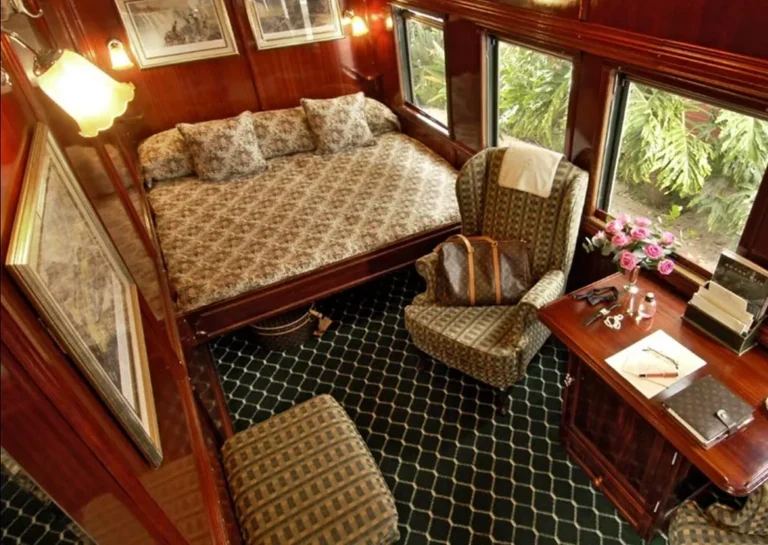
Comparing the world’s most prestigious rail accommodations requires a nuanced lens that accounts for the inherent trade-offs between historical authenticity and modern amenity. A suite on the Venice Simplon-Orient-Express, for instance, operates within the rigid physical dimensions of 1920s rolling stock, whereas a suite on Japan’s Seven Stars in Kyushu utilizes cutting-edge materials to maximize perceived volume. These differences are not merely aesthetic; they dictate the entire rhythm of the journey, from the way a guest moves within their cabin to the level of technological integration available at their fingertips.
The complexity of these accommodations lies in the “living” nature of the environment. Unlike a static five-star hotel suite, a train suite must provide comfort while in motion, manage significant acoustic challenges, and offer a seamless transition between daytime lounging and nocturnal rest. Furthermore, the service model—often involving a dedicated 24-hour steward—must be integrated into the room’s design without intruding upon the passenger’s privacy. This article examines the structural and experiential variables that allow travelers to objectively evaluate these high-stakes investments in leisure.
Compare Luxury Train Suites: A Multi-Dimensional Perspective
To effectively compare luxury train suites, one must first dismantle the marketing terminology that often obscures the technical reality of the space. The industry uses terms like “Grand Suite,” “Presidential Suite,” and “State Compartment” with significant overlap, yet the physical specifications can vary by hundreds of square feet. A common misunderstanding is that “luxury” is synonymous with “space.” In the context of rail, luxury is often more accurately defined by “exclusivity of footprint”—how much of the carriage’s limited square footage is dedicated to a single passenger versus the communal areas.
Oversimplification in this sector often leads travelers to ignore the mechanical foundations of the suite. For example, a suite located directly over the bogies (the wheel assembly) will experience significantly more vibration and noise than a suite positioned in the center of the carriage. When we compare luxury train suites, we are comparing the success of the vibration dampening, the quality of the soundproofing, and the reliability of the climate control systems—systems that are under constant stress from the movement of the train and varying external temperatures.
Another layer of complexity involves the “day-to-night” conversion. In many prestigious suites, the furniture is modular. The transition from a sophisticated lounge to a bedroom is a choreographed event performed by staff. The quality of this transition—the speed, the storage of daytime furniture, and the resulting bed dimensions—is a primary differentiator. A suite that feels spacious by day can feel cramped once a king-sized bed is deployed, a factor often omitted from glossy brochures but essential for a rigorous comparison.
Deep Contextual Background: From Pullman to the Modern Masterpiece
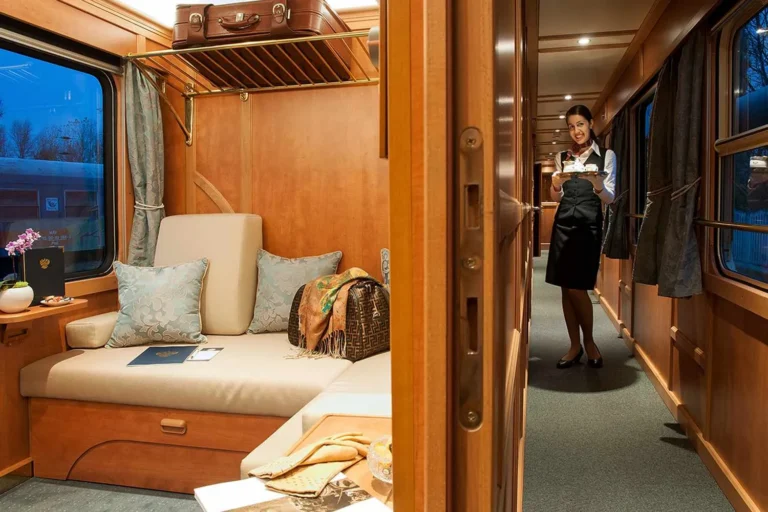
The lineage of the luxury suite begins with George Pullman’s innovations in the mid-19th century, which introduced the concept of the “hotel on wheels.” However, the modern standard was truly forged during the Golden Age of Rail (1880–1939), when the Compagnie Internationale des Wagons-Lits (CIWL) established a network of luxury trains across Europe and Asia. During this era, luxury was defined by craftsmanship: marquetry, heavy textiles, and silver service. The suite was a compact marvel of cabinetry, designed to hide its utilitarian functions behind polished wood.
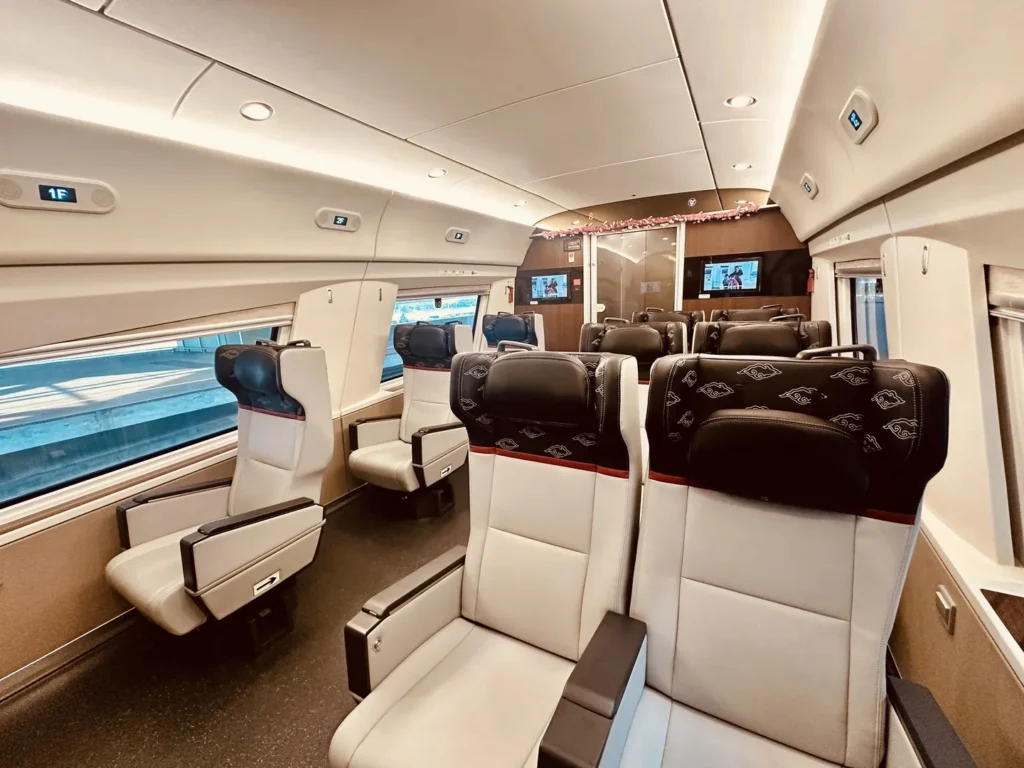
In the late 20th century, as rail faced existential threats from the jet engine, a pivot occurred. Operators realized that to compete, they could not just offer transportation; they had to offer an “unreachable” level of privacy. This led to the “de-densification” of carriages. Where a standard 1920s carriage might have held 20 passengers, a modern luxury carriage might hold only two or three “Grand Suites.” This systemic shift changed the economic model of luxury rail, moving it from a premium transport option to a boutique hospitality product.
The current landscape is defined by regional philosophies. European suites often focus on the preservation of heritage, valuing the “patina” of history. In contrast, Asian luxury trains, particularly in Japan, emphasize “omotenashi” (wholehearted hospitality) through high-tech minimalism and massive panoramic windows that turn the landscape into the suite’s primary decor. Understanding this historical and regional evolution is critical when one seeks to compare luxury train suites across different continents.
Conceptual Frameworks for Suite Evaluation
To move beyond subjective preference, we can apply specific mental models to evaluate the efficacy of a train suite.
1. The Service-to-Space Ratio
This framework measures the number of dedicated staff members against the number of suites in a carriage. A high ratio indicates that the suite’s design facilitates seamless service (e.g., a service hatch or a separate staff corridor). If the staff must use the same narrow corridor as the guests, the “luxury” of privacy is compromised, regardless of the room’s size.
2. The Kinetic Ergonomics Model
This model evaluates how the suite’s layout handles the physics of travel. Are there sufficient handholds integrated into the design that don’t look like safety equipment? Is the furniture weighted or bolted to prevent sliding? A well-designed suite acknowledges that the room is a moving object, ensuring that the guest feels secure and stable even during high-speed curves or sudden braking.
3. The Sensory Insulation Threshold
This framework assesses the suite’s ability to isolate the occupant from external stressors.
-
Acoustic: Decibel levels during peak travel speed.
-
Thermal: The consistency of temperature across the sleeping and living zones.
-
Visual: The ability to achieve total blackout for sleep, balanced against the quality of the “viewing platform” during the day.
Key Categories and Variations in Suite Design
When you compare luxury train suites, you find they generally fall into one of four architectural categories. Each has distinct trade-offs regarding privacy, view, and mobility.
| Category | Typical Square Footage | Key Features | Primary Trade-off |
| Heritage Restoration | 50 – 80 sq ft | Original 1920s/30s fixtures, marquetry. | Limited bathroom space; no showers in-cabin. |
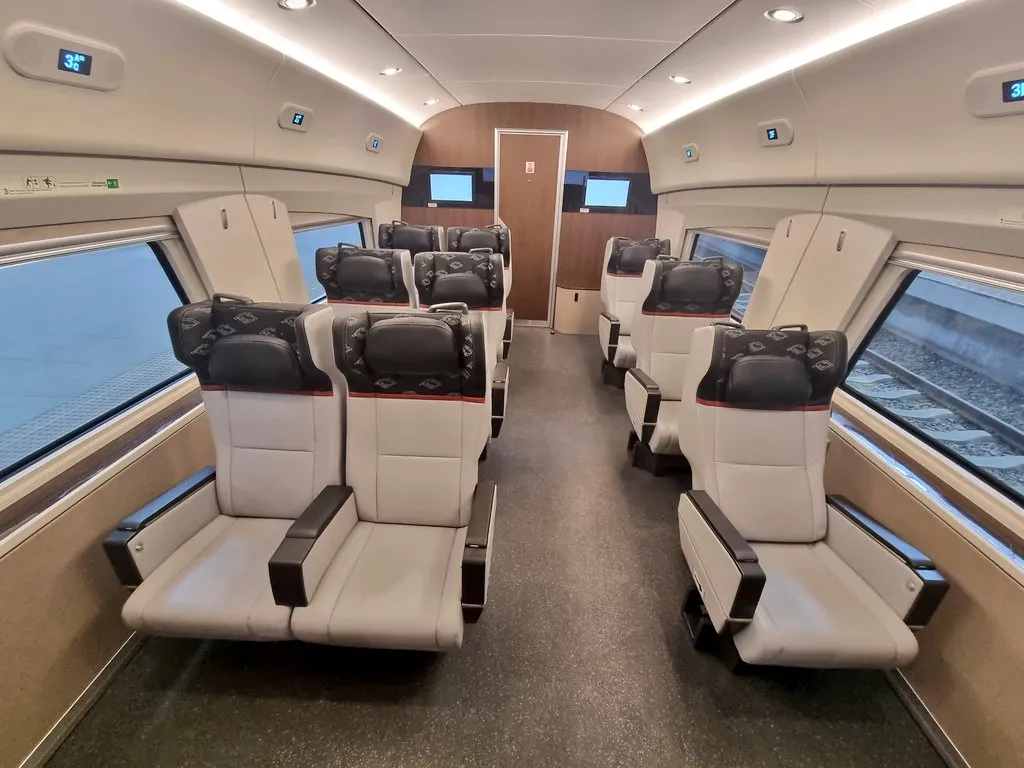
| Modern Grand Suite | 120 – 160 sq ft | Full en-suite with shower, separate sitting area. | Less “authentic” feel; higher price point. |
| Full-Carriage Residence | 300+ sq ft | Private dining, multiple rooms, bath tub. | Extreme cost; can feel disconnected from the train. |
| Observation Suite | 100 – 140 sq ft | Floor-to-ceiling glass, rear-of-train placement. | Exposure to onlookers at stations; motion feel. |
Realistic Decision Logic
Choosing between these categories depends on the duration of the journey and the passenger’s physical priorities. For a one-night journey, the Heritage Restoration’s lack of a private shower may be an acceptable trade-off for the historical atmosphere. However, on a multi-day journey across the Australian Outback or the Siberian Steppe, the Modern Grand Suite’s plumbing and climate control become non-negotiable for most travelers.
Detailed Real-World Scenarios
Scenario A: The Historic Trans-European Route
On a route like the London-to-Venice run, the primary constraint is the loading gauge of old tunnels. Suites here are masterpieces of “small-space living.” The failure mode in this scenario is often luggage management; these suites were designed for an era of trunks handled by porters. If a modern traveler brings three oversized suitcases, the suite’s “luxury” evaporates into a cluttered obstacle course.
Scenario B: The Trans-Continental Expedition
Consider a journey across the Canadian Rockies or the Australian desert. The “second-order effect” here is the changing light and heat. A suite with massive windows is spectacular at noon but can become a greenhouse without advanced glazing. The best suites in this category use electrochromic glass or multi-layered thermal blinds to manage the environment without sacrificing the view.
Scenario C: The Modern Japanese “Cruise Train”
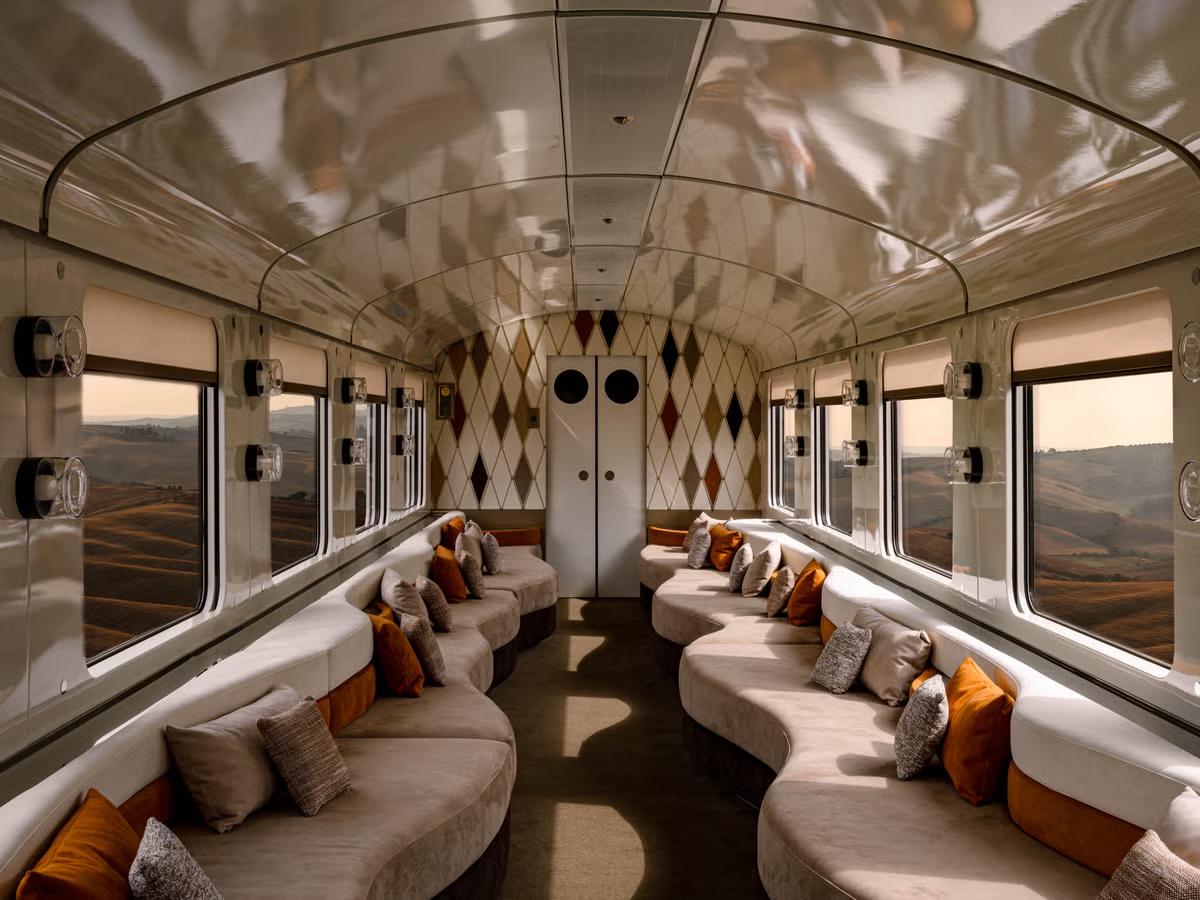
In these scenarios, the suite is a gallery. The decision point is often between the “Deluxe” and the “Global” suite. The failure mode is the “museum effect”—the space is so meticulously designed that the guest feels they cannot truly “live” in it or move the furniture. The logic here favors those who appreciate architectural intent over plush, soft-edge comfort.
Planning, Cost, and Resource Dynamics
The financial commitment required to compare luxury train suites and ultimately book one is significant. Costs are rarely “per room” but rather “per person,” which can double the perceived price.
Indirect Costs and Variability
-
The “Deadhead” Factor: If a train starts in a city other than your origin, you must account for the luxury positioning of your arrival.
-
Off-Train Excursions: Many suite prices include private cars and guides at every stop, but some “entry-level” luxury suites charge extra for these, creating a price-parity illusion.
-
The Seasonality of Track Quality: Track maintenance (or lack thereof) in certain regions can significantly affect the ride quality of even the most expensive suite.
Typical Price Ranges (Per Person, Per Night)
-
Standard Luxury Cabin: $800 – $1,500
-
Grand Suite / Presidential: $2,500 – $4,500
-
Private Carriage / Royal Suite: $6,000 – $12,000+
Tools and Support Systems for the Discerning Traveler
Navigating the world of luxury rail requires more than a booking agent; it requires specialized knowledge.
-
Carriage Floor Plans: Never book without seeing the specific layout of your carriage. Location relative to the kitchen and the engine is vital.
-
Loading Gauge Standards: Understanding if the train is narrow-gauge or standard-gauge helps set realistic expectations for suite width.
-
The Butler Interview: High-end operators allow you to specify preferences for your steward in advance. Use this to establish the “service rhythm.”
-
Virtual Walkthroughs: Use 3D renderings to understand the “clearance” when the bed is down.
-
Climate Control Specifications: Ask specifically if the AC is individual to the suite or controlled at the carriage level.
-
Pillow and Linen Menus: A hallmark of the highest-tier suites is the ability to customize the sleep environment.
Risk Landscape and Failure Modes
Even at the $10,000-a-night level, things can go wrong. The risks in luxury rail are often “compounding.”
-
Mechanical Failure: Unlike a hotel, if the AC fails in a train suite, you are in a moving metal box with often non-opening windows.
-
Vibration Fatigue: On longer journeys, the constant micro-vibrations can lead to “land sickness” or disrupted sleep, a physiological response that no amount of caviar can fix.
-
The “Bottleneck” Service: If a train has 10 Grand Suites but only one chef of note, the quality of in-suite dining may degrade if everyone orders at once.
-
Track Priority: In many countries, freight trains have priority over passenger trains. A “luxury” journey can be marred by hours of sitting on a siding next to a coal train, rendering the suite’s view moot.
Governance, Maintenance, and Long-Term Standards
How do operators maintain these suites? The “governance” of a luxury train involves rigorous “dry-dock” periods where carriages are stripped and refurbished. When you compare luxury train suites, ask when the carriage was last “refitted.” A suite from 2018 may feel significantly more worn than a 1920s suite that was fully restored in 2024.
Maintenance Checklist for Operators:
-
Acoustic Seals: Checking the rubber gaskets on doors and windows to prevent “whistling” at speed.
-
Hydraulic Systems: Ensuring the smoothness of Murphy beds and hidden tables.
-
Upholstery Steam Cycles: Managing the deep-cleaning of heavy fabrics that absorb track dust.
-
Software Updates: For modern suites, ensuring the tablet-based room controls are glitch-free.
Measurement, Tracking, and Evaluation
A sophisticated traveler tracks the “ROI” of their suite experience through both quantitative and qualitative signals.
Leading Indicators (Before the Trip):
-
Responsiveness of the pre-departure concierge.
-
Granularity of the dietary preference form.
-
Clarity of the luggage handling protocol.
Lagging Indicators (During/After the Trip):
-
Sleep Quality Score: Did the bedding and suspension allow for 7+ hours of rest?
-
“Steward Intuition”: Did the staff anticipate needs (e.g., ice, turn-down) without being asked?
-
Acoustic Comfort: Could a conversation be held at a whisper while the train was at full speed?
Documentation Examples:
-
The Cabin Log: Note any recurring rattles or temperature fluctuations.
-
Service Timeline: Track the time between a request and its fulfillment.
-
Spatial Utility Map: Mark any areas of the suite that felt “dead” or unusable.
Common Misconceptions and Oversimplifications
-
Myth 1: “More expensive means a smoother ride.” Truth: Ride quality is 80% track condition and 20% carriage suspension. The most expensive suite on a bad track is still a bumpy ride.
-
Myth 2: “All suites have private bathrooms.” Truth: Many historic luxury trains still use shared facilities for lower-tier “luxury” cabins. Always check the en-suite status.
-
Myth 3: “The view is the same from every suite.” Truth: Suites on the “landward” side of a coastal route see significantly less than those on the “seaward” side.
-
Myth 4: “Train suites are soundproof.” Truth: They are sound-dampened. You will always hear the rhythm of the rails—it’s part of the mechanical nature of the experience.
-
Myth 5: “WiFi is guaranteed.” Truth: High-end trains often pass through remote areas or tunnels where satellite and cellular signals fail. The “digital detox” is often a forced feature, not an option.
Conclusion: The Synthesis of Motion and Stillness
To compare luxury train suites is to weigh the romance of the past against the technical demands of the present. The ultimate suite is not the one with the most gold leaf or the largest square footage, but the one that most successfully mediates the relationship between the passenger and the landscape. It is a space that provides a sense of “stillness” while hurtling across a continent.
As the industry moves forward, the focus is shifting toward “sustainable luxury”—suites that use hydrogen power or reclaimed materials without sacrificing the tactile richness travelers expect. The discerning passenger must remain an analytical observer, recognizing that the true value of a rail suite lies in its ability to turn the act of “getting there” into a destination in its own right. Adaptability, intellectual curiosity, and a focus on the mechanical integrity of the experience will always lead to a more rewarding journey than simply following the highest price tag.